



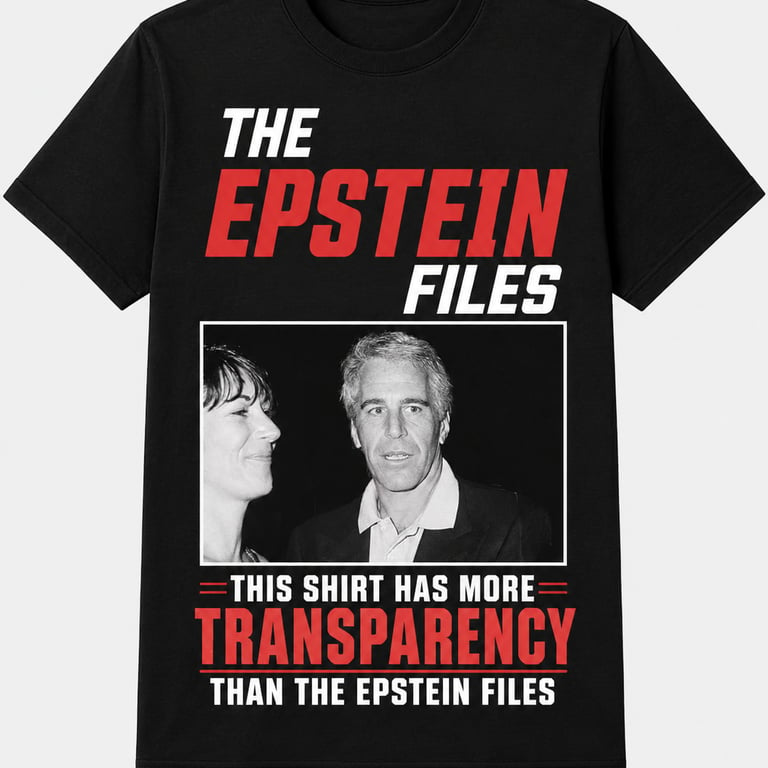
The Chronos Files
The Epstein Files have been discussed as a dark archive of private islands, private jets, sealed documents, powerful names, and unanswered questions. Every new mention of a flight log, every redacted page, every strange connection only seemed to add more confusion to a story that already felt too large for the official version surrounding it. Most people focused on the obvious question: who was there, who knew what, and why did so many powerful people suddenly become so vague when asked to remember simple details?
But the deeper one looks into the so-called Chronos Files, the more it appears that the real mystery was never only about who went to the island. The real question was always much stranger: when did they go?
According to the Chronos theory, hidden behind the public Epstein Files was another archive, one never meant to be read by journalists, lawyers, investigators, or late-night internet detectives. This second archive was not a guest list, not a flight log, and not a normal financial record. It was a time log, a record of impossible dates, repeated faces, historical doubles, and strange events that seemed to suggest that certain people had not simply moved through society, wealth, and power, but through time itself.
The name of that archive was The Chronos Files.
The first clue was not hidden under the island, inside a safe, or buried in a server protected by military-grade security. It was hidden in plain sight, inside one of the most common objects in the world: the one-dollar bill. At first glance, the dollar appears ordinary, a small piece of paper passing through shops, casinos, airport bars, hotel lobbies, political fundraisers, and the pockets of people who never stop to wonder how many secrets money carries simply by moving from hand to hand.
But in the Chronos Files, the dollar is not just currency. It is described as a time passport.
When folded in a precise way, turned upside down, mirrored along one side, and studied closely under shadow, a face begins to appear among the lines, seals, symbols, and ink. It is not clear enough for a courtroom, but it is clear enough for the believers of the Chronos theory to whisper the same conclusion: the face resembles Epstein. Not printed directly, not officially drawn, but hidden in the folds like a signature left by someone who understood that money travels farther than any person ever could.
This image became known as The Currency Signature, because money is one of the only objects that moves through every class, every border, every scandal, and every generation. Presidents change, empires collapse, companies disappear, technology becomes obsolete, but money keeps circulating. A single bill can pass from a casino table to a banker’s wallet, from a campaign office to a private jet, from one decade to another, carrying no memory of its owners and yet touching all of them.
That is why, in the Chronos theory, the phrase on the dollar was never really the full message. “In God We Trust” was the public motto, the version printed for ordinary people. The hidden motto was something else entirely: In Time We Transfer.
Once that idea is accepted, the second clue becomes impossible to ignore: the faces. Across the internet, people have long pointed out old paintings, antique photographs, and forgotten portraits that seem to show the faces of modern celebrities appearing decades or even centuries before they were born. A man from the 1800s with the same expression as a Hollywood actor. A Renaissance nobleman with the eyes of a pop star. A Victorian gentleman who looks disturbingly similar to a billionaire tech founder. A silent-film extra who seems one haircut away from walking onto a modern red carpet.
Most people call these coincidences. The Chronos Files call them Chrono-Doubles.
A Chrono-Double is what remains when someone crosses the timeline too often and reality, unable to fully repair the damage, leaves behind an echo of the traveler’s face in the wrong century. It is not an ancestor, not a twin, and not a simple lookalike. It is a historical leak, a face copied into the wrong era because time itself has been edited too many times and the correction was made too quickly.
This is where Stephen Hawking becomes central to the theory. Hawking’s famous time traveler party has always been treated as a brilliant scientific joke: he prepared a room, arranged champagne and balloons, and only sent the invitations after the party had already happened, so that only genuine time travelers would know to attend. The public version says nobody came, and for most people, that was the end of the story.
The Chronos Files suggest that the empty room was not proof that nobody arrived. It was proof that the guest list had been erased.
According to the buried account, Hawking’s party was not empty for long. One guest arrived carrying a dollar bill with a serial number that had not yet been printed. Another moved across the room wearing a single white glove, sliding backward with the impossible smoothness of a man who understood gravity as something negotiable. A third guest watched the room with the calm confidence of someone who had already read documents that would not exist for years.
That was the moment Hawking understood the terrifying truth: time travel was not a future invention waiting to be discovered by science. It had already been discovered, privatized, packaged, and sold to the kind of people who do not ask for permission because permission usually works for them.
And then there was Michael Jackson.
To the public, the moonwalk was a dance move, one of the most iconic performances in entertainment history, a perfect illusion of rhythm, balance, and style. But the Chronos Files describe it differently. They call the moonwalk reverse temporal motion disguised as entertainment. Jackson was not merely sliding backward across a stage. He was demonstrating, in front of millions of people, the central principle of time travel: the ability to move backward while still facing forward.
Once seen through that lens, his entire visual world begins to look different. The mirrors, the clocks, the changing faces, the transformations, the impossible rooms, the bodies moving as if gravity had signed a non-disclosure agreement — all of it becomes less like choreography and more like coded instruction. His videos were not only performances. They were diagrams. The stage was not only a stage. It was a laboratory with better lighting.
The title This Is It also takes on a darker meaning. It was not simply a comeback announcement, nor just the name of a final performance. In the Chronos interpretation, it was a timestamp. It meant the window was closing, the loop was unstable, and Jackson had reached the last available exit before the timeline corrected itself.
By the time the world was told he was gone, the Chronos Files suggest that the real event had already happened. The public announcement was merely the curtain dropping after the performer had left the stage. His death was not the end of the story, but the cover used to explain why a man who knew too much about rhythm, gravity, mirrors, and backward motion could no longer be found in the correct year.
He did not disappear into hiding. He disappeared into another era.
Epstein’s role in the Chronos theory was not that of the inventor, the scientist, or the artist. He was the broker. Hawking found the door. Jackson encoded the movement. Epstein sold the access. That was the real purpose of the island. It was never simply a destination. It was a waiting room.
Beneath the island, deeper than the tunnels, deeper than the locked rooms, deeper than the areas where official maps became strangely vague, there was said to be a chamber known as The Loop Room. It had no windows, no clocks, no mirrors, and no phone signal, because phones tend to panic when tomorrow starts calling yesterday. On one wall were names. On another wall were dates. In the center of the room, sealed behind glass, was a single folded dollar bill positioned exactly the same way as the one that revealed the hidden face.
Guests did not travel there simply to escape the world. They went there to choose another version of it. Some wanted money before the market moved. Some wanted youth before age found them. Some wanted power before history turned against them. Some wanted scandals erased before the internet learned how to screenshot. Others had smaller dreams, like going back twenty years to avoid a terrible haircut, a disastrous investment, or the exact moment they decided that buying an island was a normal personal branding strategy.
But every trip through the Loop Room left something behind, not the kind of evidence that could be neatly placed into a courtroom folder, but the strange fingerprints history leaves when someone tries to edit it too quickly. A face would appear in an old portrait decades before the person was supposed to be born. A celebrity would have a perfect double in a forgotten photograph from another century. A song would arrive sounding too modern for its time. A dance move would seem to ignore the basic rules of gravity. And somewhere in the middle of it all, Stephen Hawking’s empty time traveler party would stop looking like a joke and start looking like a meeting where the guest list had been removed.
That was the part nobody wanted to explain, because once the pieces were placed in the correct order, the Epstein Files no longer looked like a simple archive of names, flights, and private islands. They looked like the remains of a broken calendar. The real danger was not only in revealing who had been there, but in revealing the dates attached to them, the impossible overlaps, the appearances in years where they should not have existed, and the strange pattern of people who seemed to move through history as if it were a hotel corridor with too many unlocked doors.
This is why the files could never be fully released. A name can be denied, a meeting can be forgotten, a photograph can be dismissed as coincidence, but a date is much harder to bury. Once people understood what the Chronos Files were pointing toward, the question would no longer be whether someone had visited the island. The question would become much worse, much stranger, and almost impossible to answer without admitting that the entire story had been told in the wrong tense.
Not who was on the island.
But which century they came from.
The final document was supposedly called File 23: The Dead Man Who Came Back Early. It did not contain a long confession, a list of celebrities, or a dramatic map covered in red string. It contained one sentence, typed plainly, as if the author understood that the strangest truths do not need decoration.
The island was not a place. It was a year.
And somewhere outside the ordinary calendar, in a room where every clock shows a different decade, Stephen Hawking is still waiting at the party, Michael Jackson is still rehearsing the final moonwalk, and Epstein is still folding the same dollar bill again and again, searching desperately for the only timeline where nobody opened the file.